An original abstract oil painting on board by British artist Frank Beanland (1936-2019), associated with the St Ives School and the Cornish abstract movement. The long narrow composition features a grid-like arrangement of overlapping geometric blocks balanced by loose expressive brushwork. Dominated by primary reds and blues, offset with vibrant lime greens and deep blacks, the work demonstrates Beanland’s characteristic exploration of colour, light, and structure.
-
Date / Era: 2007
Material: Oil on board
Dimensions: W 47.8 x D 3.1 x H 137.5 cm
Signed: Verso
Condition: Good
Framing: Oak box frame, with a light mahogany stain. Professionally framed by Heron Framing, Falmouth.
ABOUT THE ARTIST
Frank Beanland (1936–2019) was a British painter whose career spanned the transition from post-war figuration to lyrical abstraction. Born in Bridlington, Yorkshire, he studied at Hull College of Art from 1952 to 1957 before attending the Slade School of Fine Art between 1959 and 1961, where he studied under Claude Rogers and won a scholarship to Sweden.
Beanland began exhibiting with the Young Contemporaries and subsequently showed work at leading galleries and institutions including the Drian Galleries, the London Group and Gimpel Fils. Following a move to Cornwall in the early 1960s, he became associated with the Porthleven Group of artists centred around Michael Canney's Summer School and Gallery, a period during which he embraced abstraction. After teaching at Swansea College of Art, he settled in Suffolk in 1966.
His early palette-knife paintings evolved into the celebrated 'spot paintings' of the mid-1960s, which established his distinctive use of colour and were exhibited in both London and France. In later years, Beanland developed a powerful body of work using acrylic on newsprint, attracted by the immediacy, unpredictability and physicality of the medium. These richly textured works, often inspired by the landscape and colours of the Suffolk coast, demonstrate his enduring fascination with colour, surface and abstraction.
An original abstract oil painting on board by British artist Frank Beanland (1936-2019), associated with the St Ives School and the Cornish abstract movement. The long narrow composition features a grid-like arrangement of overlapping geometric blocks balanced by loose expressive brushwork. Dominated by primary reds and blues, offset with vibrant lime greens and deep blacks, the work demonstrates Beanland’s characteristic exploration of colour, light, and structure.
-
Date / Era: 2007
Material: Oil on board
Dimensions: W 47.8 x D 3.1 x H 137.5 cm
Signed: Verso
Condition: Good
Framing: Oak box frame, with a light mahogany stain. Professionally framed by Heron Framing, Falmouth.
ABOUT THE ARTIST
Frank Beanland (1936–2019) was a British painter whose career spanned the transition from post-war figuration to lyrical abstraction. Born in Bridlington, Yorkshire, he studied at Hull College of Art from 1952 to 1957 before attending the Slade School of Fine Art between 1959 and 1961, where he studied under Claude Rogers and won a scholarship to Sweden.
Beanland began exhibiting with the Young Contemporaries and subsequently showed work at leading galleries and institutions including the Drian Galleries, the London Group and Gimpel Fils. Following a move to Cornwall in the early 1960s, he became associated with the Porthleven Group of artists centred around Michael Canney's Summer School and Gallery, a period during which he embraced abstraction. After teaching at Swansea College of Art, he settled in Suffolk in 1966.
His early palette-knife paintings evolved into the celebrated 'spot paintings' of the mid-1960s, which established his distinctive use of colour and were exhibited in both London and France. In later years, Beanland developed a powerful body of work using acrylic on newsprint, attracted by the immediacy, unpredictability and physicality of the medium. These richly textured works, often inspired by the landscape and colours of the Suffolk coast, demonstrate his enduring fascination with colour, surface and abstraction.

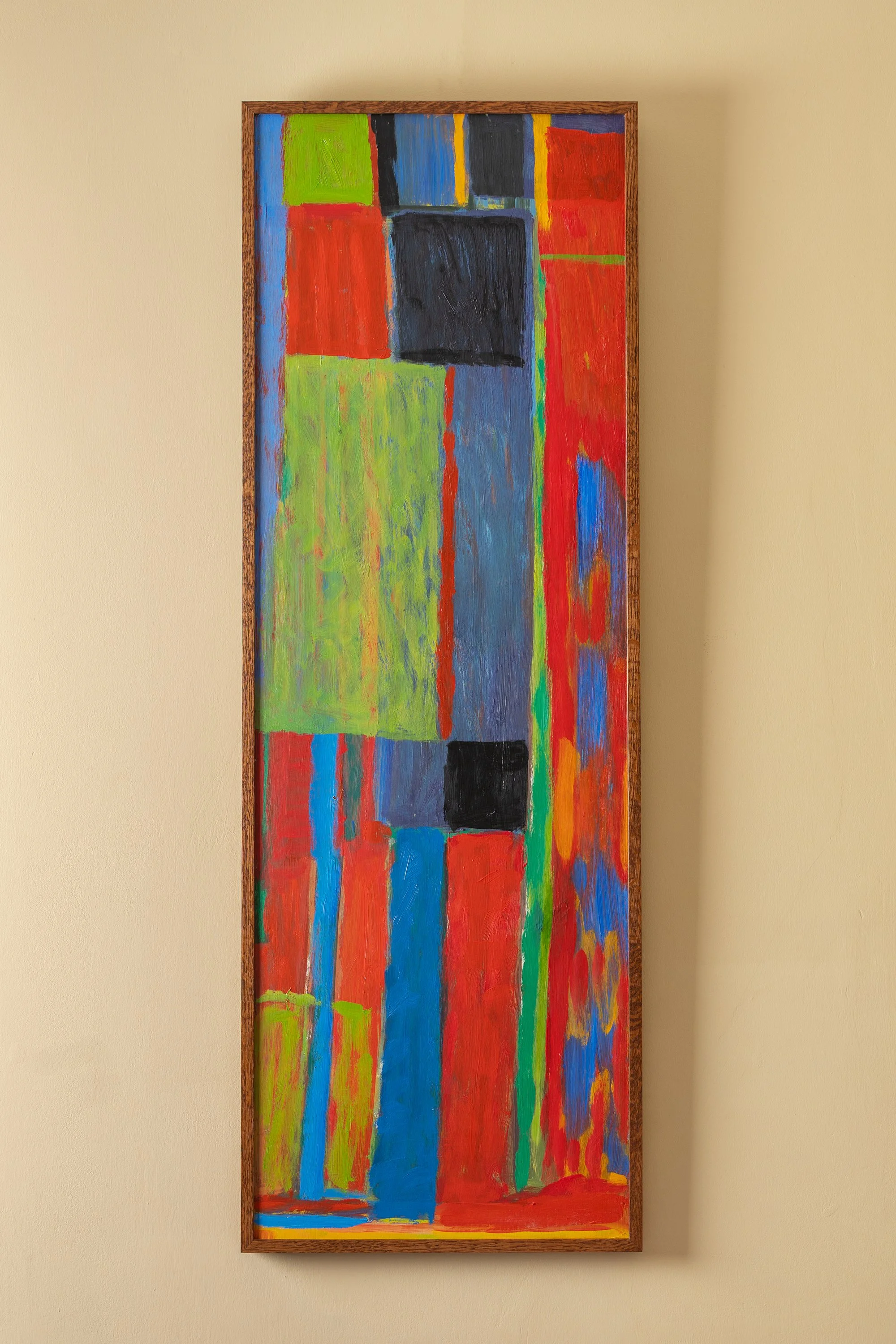 Image 1 of 7
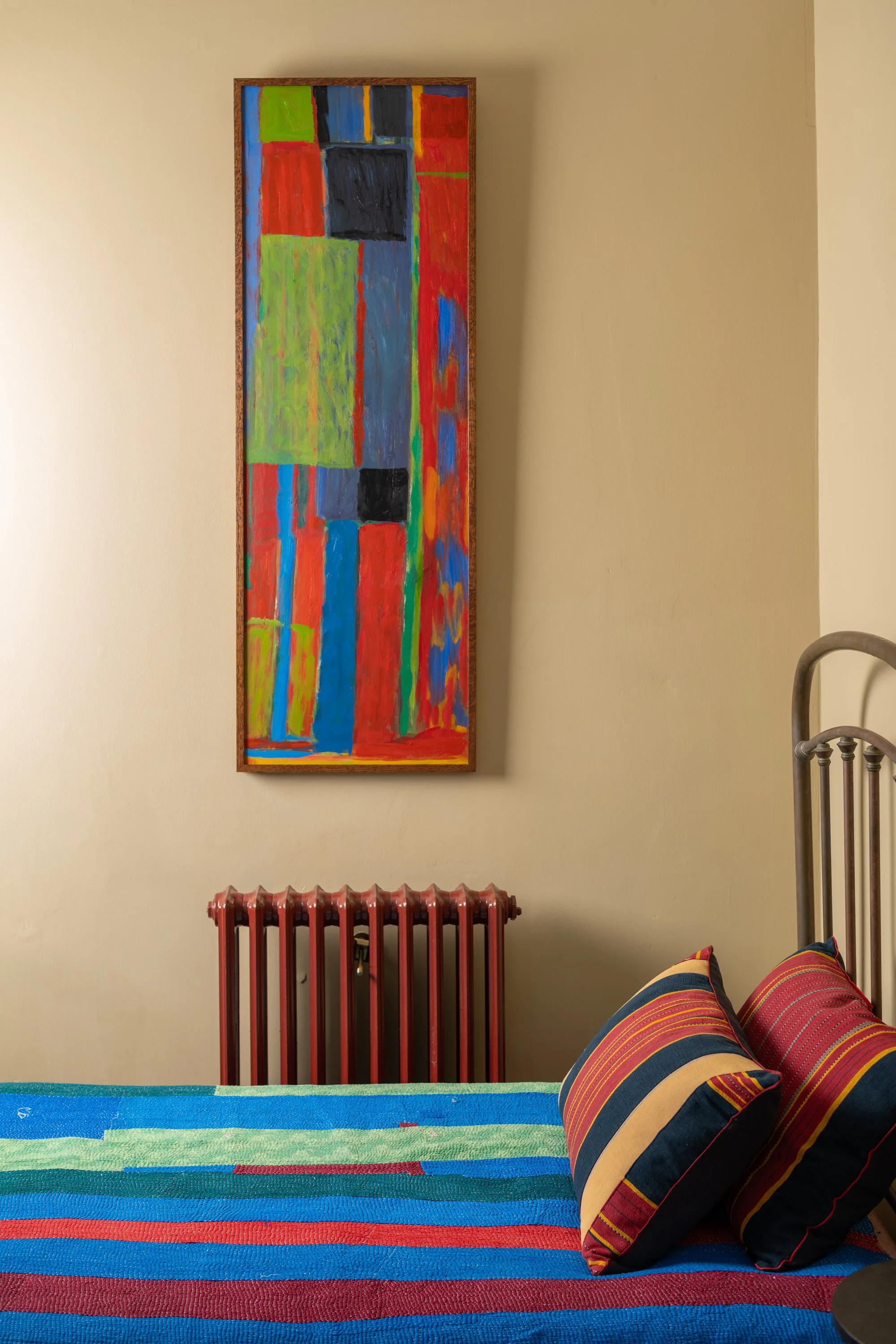 Image 2 of 7
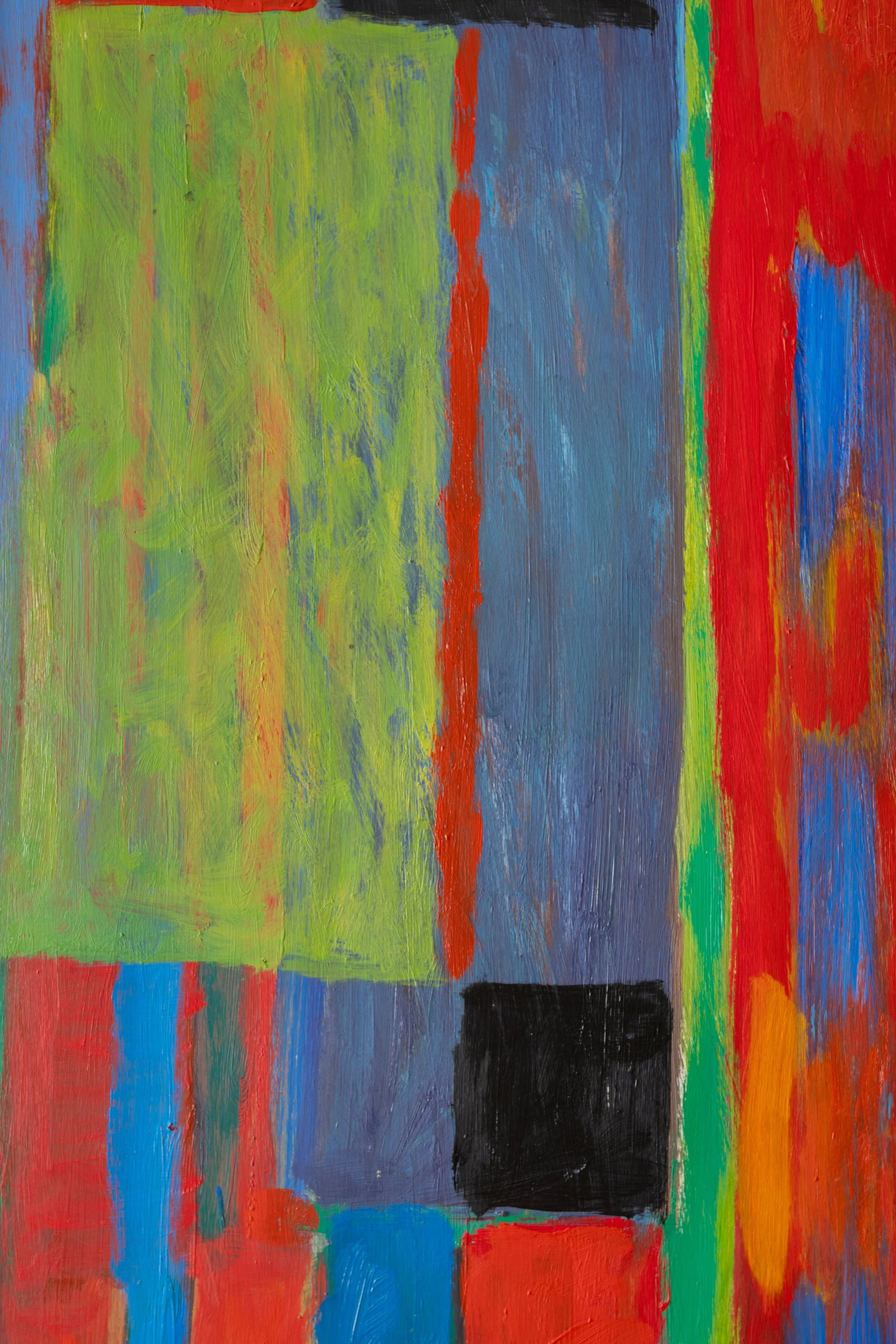 Image 3 of 7
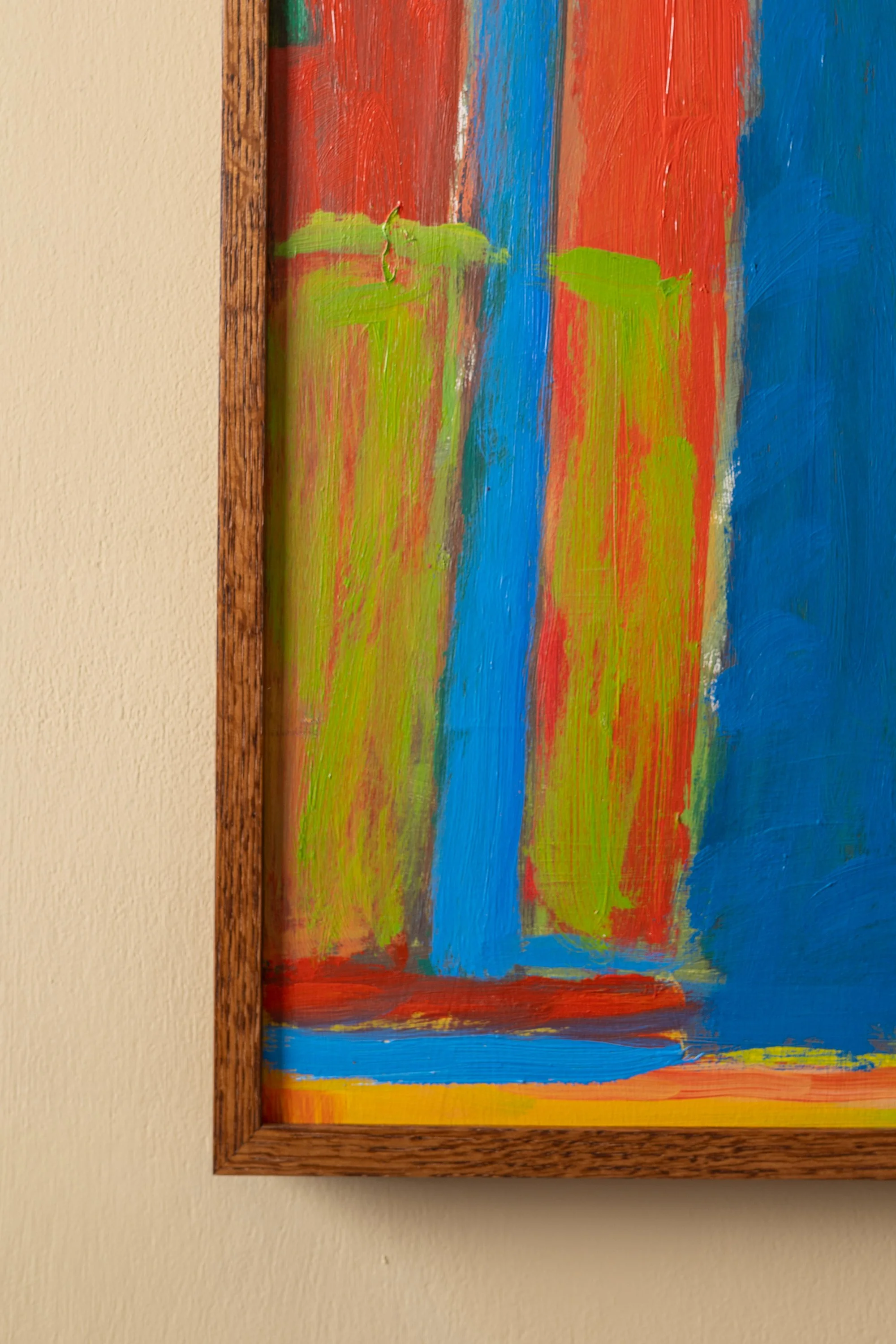 Image 4 of 7
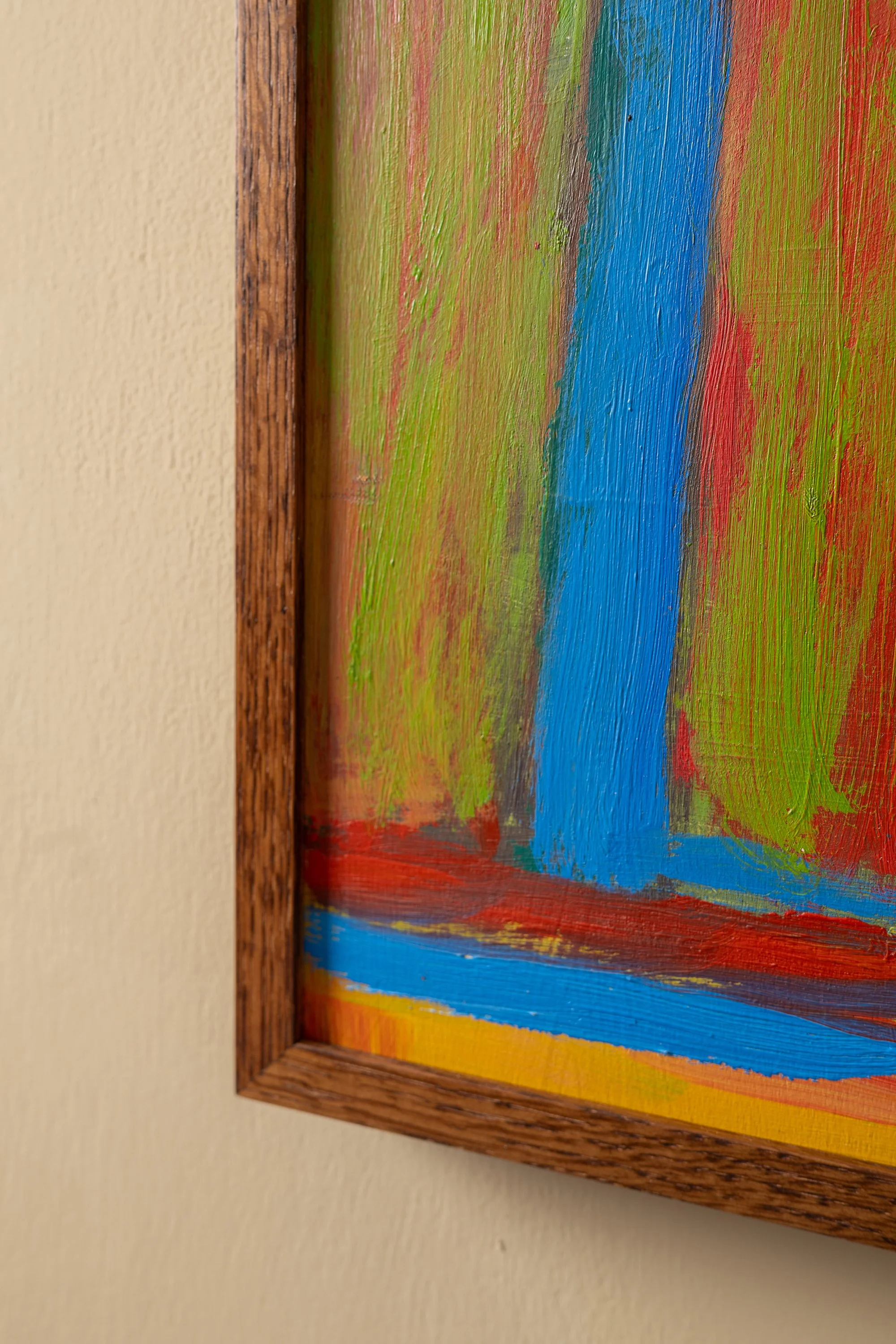 Image 5 of 7
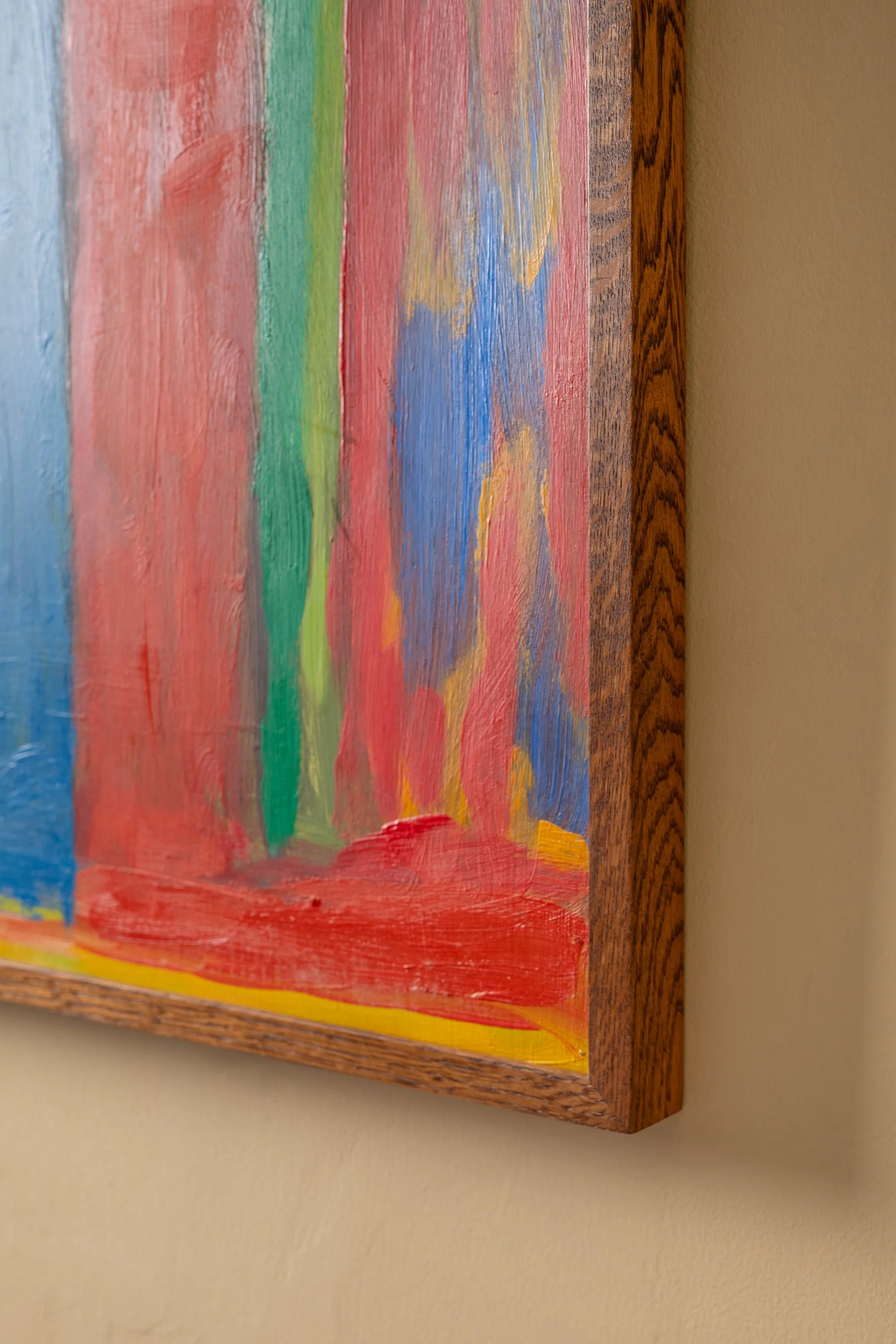 Image 6 of 7
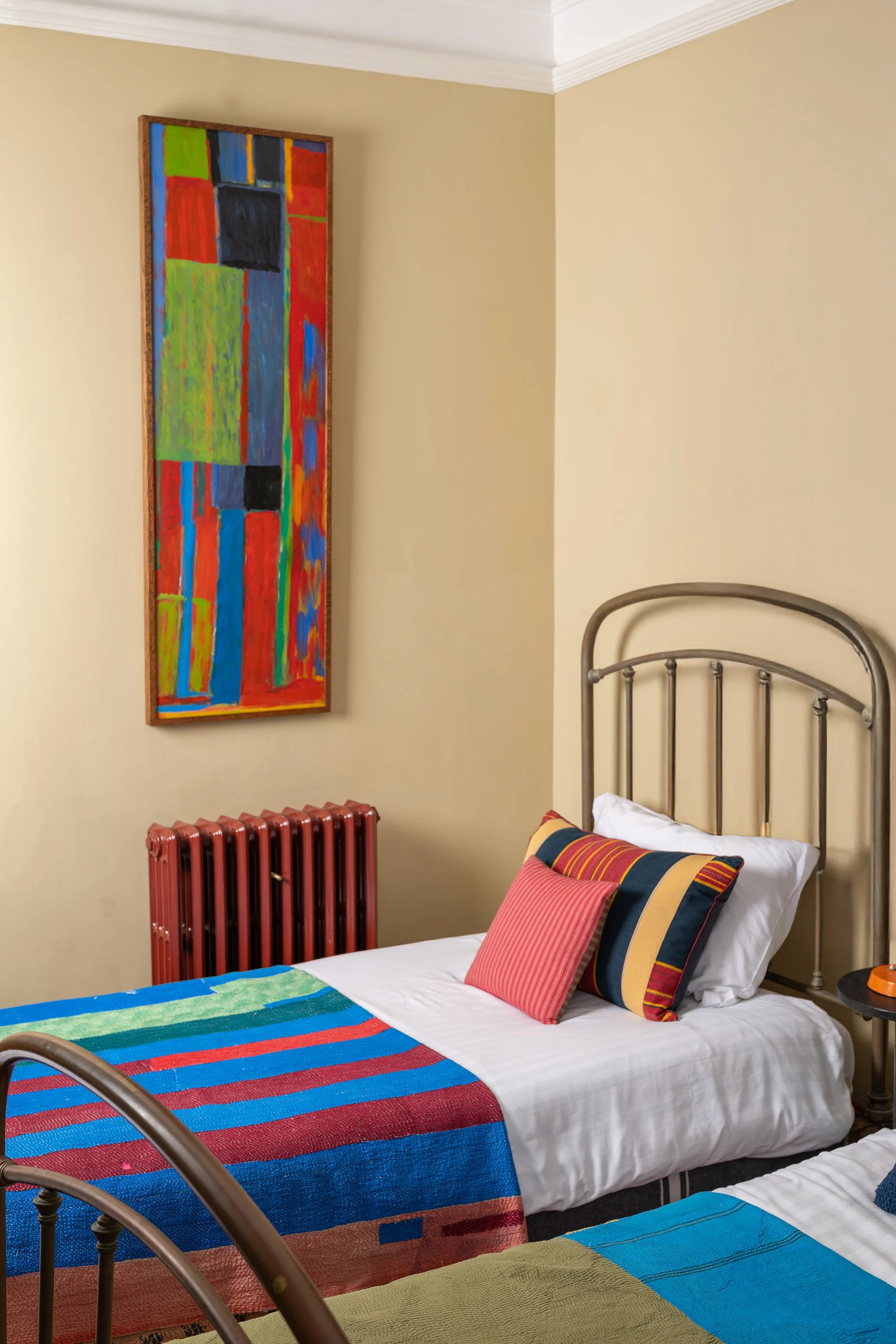 Image 7 of 7